

Odorous House Ant
Order: Hymenoptera
Family: Formicidae
Scientific name: Tapinoma sessile
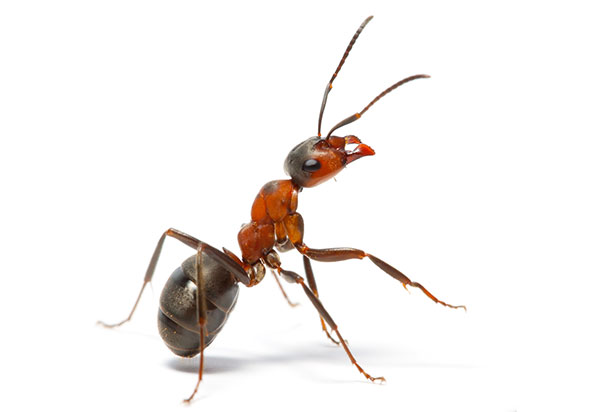
Odorous House Ant workers are 1/16thto 1/18thinch long and colouration is brown to black. The thorax has no spines and the petiole has one segment which, when viewed from above, its hidden by the rest of the abdomen. There is a slit at the tip of the abdomen instead of a circular band of hairs. The best identifying characteristic is the rancid butter smell produced when the ants are crushed. Hence, their name Odorous House Ant.
Biology:
These ants swarm to mate from early May through mid-July, they also made within the nest forming new colonies by budding off from the original colony. Approximately 10,000 workers and several Queens in the colony & each lay one egg per day Developmental time from egg to adult is 30 – 90 days. During winter, it may take six to seven months to develop. There are several generations per year.
Habitat and Economic Importance:
Odorous House Ants often nest outdoors beneath stones and logs and within the nest of larger ants. They also nest indoors in voids of the floor, around heat sources such as hot water pipes, heaters, heating equipment, cracks and crevices, kitchen sinks and cabinets. They travel in trails and prefer sweets, although they eat almost any household food. They usually invade structures during rainy periods after honeydew on plants has washed off.
Common Site of Occurrence:
These ants are commonly found in the outdoors and indoors as well. They travel in trails and prefer sweets but can eat almost any household food. They usually invade the structure during the rainy season as the source of food will be washed off outside. In outdoors they prefer nesting beneath stones and wood logs, indoors they prefer wall voids, floor voids, around heat sources such as hot water pipes, stove, heaters, crevices around sink and cabinets. They prefer to travel in trails only.
Management:
All cracks and crevices within the exterior wall that provides access to interior areas should be sealed. All debris from the exterior of the structure and other items on the ground where these ants’ nest is to be cleared. Although odorous house ants prefer sweets, they are not easily controlled with sweetened baits. Baits should be placed where Ant trails have been established or have been sighted. Bait placement should be such that they are inaccessible to children and pets.
Sweet baits are effective in summer and in winter, protein baits are more effective. The most effective control is accomplished by following ant trails locating the nest and treating the nest with the residual insecticide. The Exterior nest should be drenched with a liquid formulation. Nest within wall voids is to be treated with a spray application or a dust formulation. When the nest cannot be located, a barrier spray treatment using a non-repellant product is the most effective treatment. Microencapsulated or wettable powder repellent formulation can be used, which not only repel and kill foraging workers they also can trap them inside
We Are Authorized Dealers Of..