

Common House Spider
Order/family: Araneae
Scientific Name: Achaearanea tepidariorum
Description:
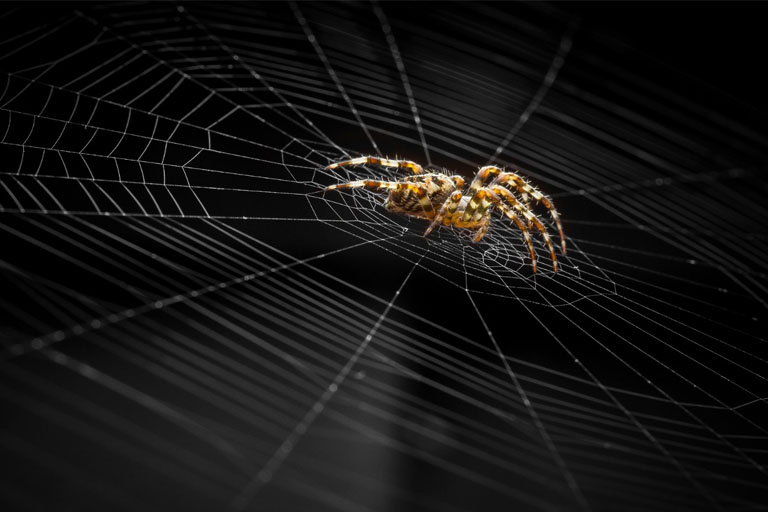
T The body of the female House Spider is about 3/16th to 5/16 inch long and yellow-brown with a dirty white abdomen, with stripes on the back. Males are smaller than females with a longer, narrower abdomen and feed on small insect’s household pests such as flies, mosquitoes, ants and wasps. They can randomly attack grasshoppers, butterflies, cockroaches or other spiders depending on their size. Bigger females can also attract baby skinks inside their web by leaving fly remains hanging in it.
Biology:
House Spiders lay eggs in brownish silken sacks which have a tough papery cover. A female produces up to 17 sacks during her lifetime, each of which contains approximately 250 eggs. Young Spiderlings remain in the sack until the second molt; they are cannibalistic, eating one another. They live within the vicinity of the nest until after the second molt at which time they produce long threads of silk. Female spiderlings undergo 7 molts before maturing. Adults typically live for a year or more.
Habitat and Economic Importance:
House Spiders survive better in areas with high humidity, such as garages, sheds and warehouses. The lower humidity is not conducive to their survival. In structures with higher humidity, webs are constructed in upper corners under furniture around window and door frames, basements, garages and crawlspaces. Outdoors, webs are built around window and door frames near lights.
Common Site of Occurrence:
Common house spiders will live just about anywhere. They can be seen in gardens, backyards, basements, attics, barns, sheds, and any other type of man-made structure. These are the most common webs which we see in the urban inhabitation where onside of the web will be thick and the other side will be thin in activity and recommended to remove clutter and debris, scrapped woodpiles, rocks and other protective outdoor materials from the structure. A vacuum cleaner should be used to remove spider webs, eggs and the bag immediately sealed and discarded. Using this technique to control house spiders is relatively easy since they build webs that are more exposed than those of black widows of brown recluse spiders.
Pesticides can be applied as residual sprays with special emphasis on application into potential or known harborage areas. ULV Misting containing pyrethroids can be used to kill adult spiders.
We Are Authorized Dealers Of..