
Fruit Fly
Order/family: Diptera/Drosophilidae
Scientific Name: Drosophila spp.
Description:
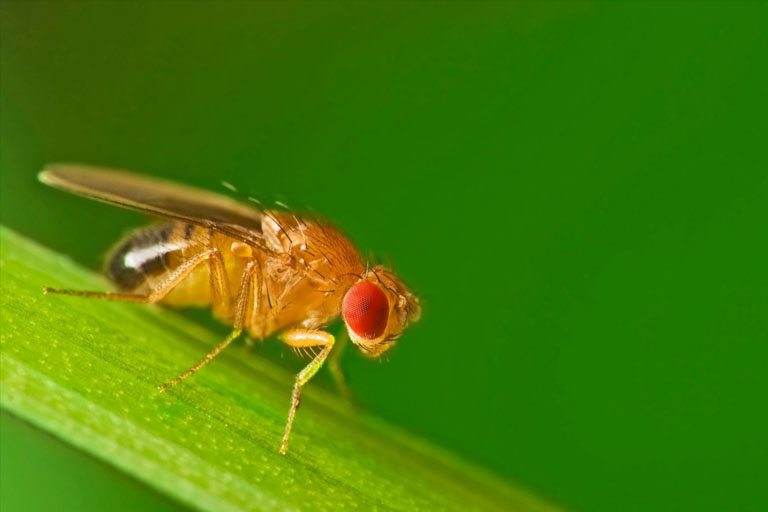
Abrow brown. dult Fruit Flies are 1/8 inch long, dull yellow-brown to dat rown. Some species have distinctive red eyes; the wing have two “breaks” in the leading edge (vein) near the body. The larvae are small (1/10 to 1/5 inch long) and very distinctive with an extended, stalk like breathing tube at the rear of the body. The pupae are brown with two horn-like stalks at one end.
Biology:
The eggs are laid onto the surface of fermenting fruit or vegetables produces or areas where moisture and yeast are abundant. Each female es up to 500 eggs, and they hatch within 30 hrs. The larvae complete development in five to six days and crawl to drier areas of food or elsewhere in order to pupate. The life cycle (adult to adult) requires eight to ten days.
Habitat and Economic Importance:
Fruit Flies are common structural pests frequently associated with fermenting fruits and vegetables. They easily develop in over-ripe fruits or other foods, fermenting liquid in the bottom of garbage cans, a dirty mop, or a rotting potato or onion in the vegetable bin.
Recycling bins fruit and salad bars are ideal habitats and have resulted in increased problems with this pest fly.
Common Site of Occurrence:
Fruit flies are common pest of indoor structural pest and are very rarely seen outside. The breeding and presence of these insects are closely associated with fermenting fruits and vegetables. They easily develop on over ripe fruits and foods, fermenting liquid and garbage cans, dirty mops, rotting potato or onion in the vegetables. These insects are not found in clean and hygienic places. It is found in both commercial establishment’s food handling areas and households.
Management:
They are best controlled by finding and eliminating the breeding material. The presence of adult flies indicates that larvae are developing in nearby fermenting materials, Complete and thorough sanitation is necessary to eliminate the source of infestation. Insect light traps and baited jar traps fitted with tops permit fly enter and prevent escape are effective in reducing the population. Several species are small enough to pass throug typical screens, so a smaller mesh may be required. In limited situations, an aerosol can be used to knock down adults. Any of food material as they hover around the food material in very spraying activity, care has to be taken to ensure proper protection close proximity. The most successful and effective methods have always been, in this case, is, source reductio methods coupled with good sanitation methods.
We Are Authorized Dealers Of..